

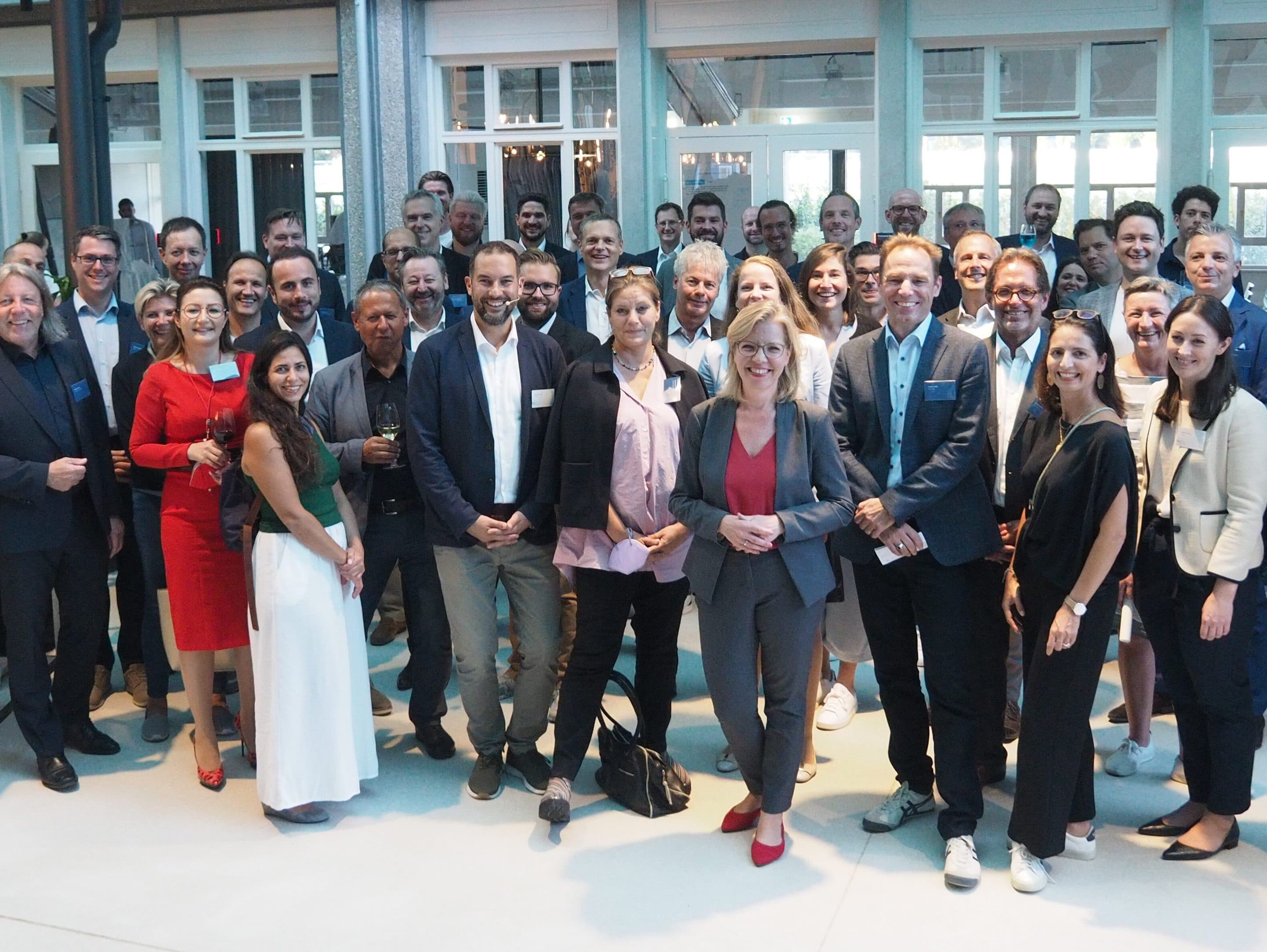
At the first Glacier X, 70 CEOs and decision-makers discussed how climate action can become an essential part of their companies' DNA.
In September 2021, 70 CEOs and decision-makers from the Glacier Community gathered at Value One for the first Glacier X. They discussed how climate action can become an essential part of corporate DNA. Ahead of the next Glacier X, we have summarised the results of the discussion for you here.
Glacier X: A Gathering for Climate Action
No company can afford to ignore the topics of sustainability and climate action any longer. They sit at the top of the senior leadership agenda and are part of strategic decisions. But above all, companies must also inspire their employees to embrace the topic. So how can climate action be embedded into a company's DNA? And how can we actively integrate climate action measures into everyday work?
On 13 September 2021, 70 decision-makers from the Glacier Community discussed these questions, along with the opportunities and obstacles of this transformation, at the kick-off of Glacier X. We have summarised the results of the first edition of Glacier X for you here:
Celebrate small wins
Decision-makers in the field of climate action are optimistic that the transformation will succeed, but they also face a number of challenges. Not all employees can always be equally inspired by the topic. So how do you deal with indifference? Especially when the quota of 'comfortable' small measures has been exhausted and comprehensive changes become necessary, the support of the entire workforce is essential. It helps to communicate even small successes and to highlight the personal benefits for each individual. But beware: the communicated measures should not be perceived as greenwashing.
Climate action must be a leadership priority
If you want to drive climate transformation in a company, you should follow tried and tested principles. The top principle: climate action must be a leadership priority and be lived by example. Overarching goals should be defined in such a way that they clearly convey to employees why their commitment is worthwhile. To spread the topic widely, it is important to identify and strengthen 'early followers'. If the necessary awareness and knowledge are missing in some positions, this gap needs to be closed. It is also up to the CEO to give employees the necessary time and space to engage with the topic – independent of day-to-day operations and short-term revenue targets.
Connect top-down and bottom-up Within the company, it is also necessary to bring together top-down and bottom-up initiatives. There is no more either/or. Both approaches are necessary and complement each other. Because a sustainability team that is heard neither by management nor by employees cannot shape transformation. The team driving the change should therefore be interdisciplinary and inclusive in its set-up and familiar with the basic principles of change management.
Take external framework conditions into account
In addition to the factors the company itself can control, there are external framework conditions that cannot be directly influenced. Laws and regulations are intended to accelerate climate action and provide planning certainty. Key here is a CO2 price that is high enough to fulfil its steering function. Once the external framework, the internal scope and the necessary structures are in place, the path is clear for change.
Climate action as a driver of innovation and growth When climate action is part of the strategic corporate goals, it can become a driver of innovation and growth. The possible win-win scenarios are diverse: In the area of talent management and HR, employees identify more strongly with the company. As a result, they are more motivated and productive – with positive effects on employer branding as well: the company positions itself as an attractive employer and thereby attracts new talent.
From a product development perspective: a better understanding of climate change and its impacts drives the internal innovation engine. New profitable offerings emerge that diversify the existing product range.
With the awareness of the societal costs of climate change, internal processes are also streamlined and restructured. And among consumers, active climate action increases trust in the brand and guarantees long-term loyalty. This is also reflected in dealings with suppliers and customers. Because upstream and downstream emissions in the supply chain can only be tackled together with them. Jointly driving decarbonisation forward fosters closer relationships with strategic partners and reveals hidden risks that have not yet been identified.
For many, the path towards becoming a climate-friendly company is not (yet) entirely clear. However, the kick-off of Glacier X in September showed how committed many companies are to illuminating this path and taking the first steps.
In cooperation with ING Bank, ServiceNow and Value One, we are looking forward to the next event on 17 May 2022 and are excited about the insights of the evening!